From Philly and the Pa. suburbs to South Jersey and Delaware, what would you like WHYY News to cover? Let us know!
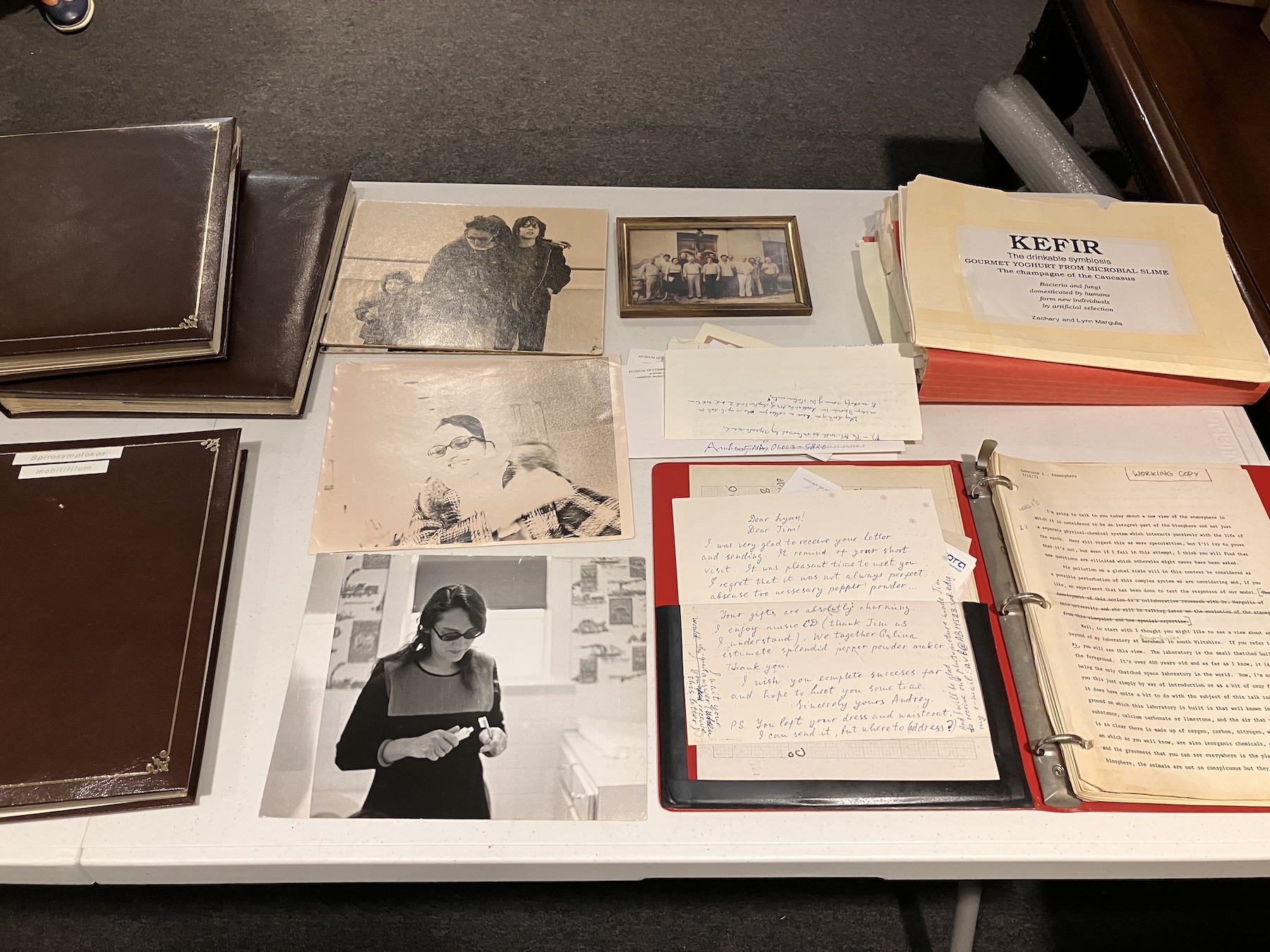
After the death of influential evolutionary biologist Lynn Margulis in 2011, her papers, letters and research journals ended up in a storage facility in New York. Then, her family moved the collection to Southern Oregon, where it was almost destroyed in the devastating Almeda fire in 2020. Now, the collection has safely arrived at The American Philosophical Society in Philadelphia, where employees are carefully sorting through boxes and boxes of materials.
The writings and materials shed light on the life, work and thinking of the pioneering biologist who made the case that cooperation and symbiosis — not just competition and random mutation—have been major forces in evolution. During her lifetime, her theories were not always well received and were even considered “wild evolutionary heresy,” according to her obituary in the Guardian, but she’s now recognized as the greatest contributor to ideas about evolution since Charles Darwin.
Often considered a scientific maverick or rebel, Margulis didn’t shy away from challenging prevailing ideas. She argued that symbiosis is a creative evolutionary force: organisms don’t simply compete and accumulate small mutations; sometimes they merge with other organisms to acquire entirely new capabilities. In her groundbreaking 1967 paper, “On the Origin of Mitosing Cells,” she argued that eukaryotic cells — the complex cells that contain a nucleus — evolved in part through symbiosis, when simpler cells took up bacteria that eventually became permanent residents inside them.
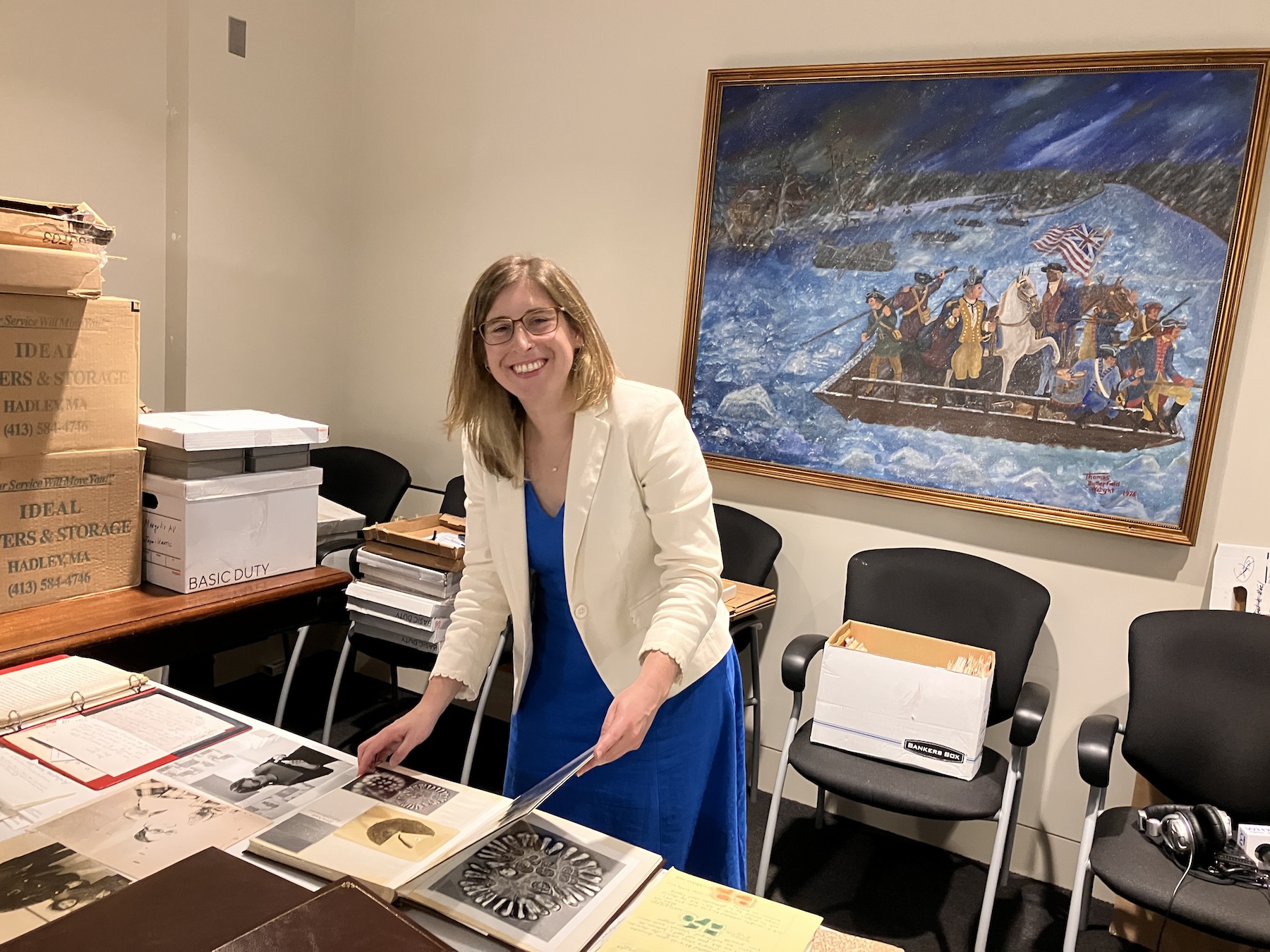
“So this was the publication that really put Lynn’s theories of symbiogenesis on the map,” said Adrianna Link, curator of history of science at the American Philosophical Society. Looking over a pile of Margulis’ papers spread out on a table, Link pointed to a copy of the famous paper.
“And here you can see the sticker that’s covering up her married name; it was actually published under the name Lynn Sagan.” The late astrophysicist Carl Sagan was Margulis’ first husband, but by the time the paper was published, they were divorced. “She replaced the name here with the sticker that says Lynn Margulis, which was the name that she used for most of her scientific life,” Link said.
Margulis’ daughter, Jennifer, said she’s relieved the collection is safe and will become accessible to researchers, especially after the shock of almost losing it all during the 2020 fire.
“The entire storage facility burned to the ground, except for a couple of units. So that was an incredible gift from the universe, if I can say it that way, that we didn’t lose her papers.”
Sorting through the collection and making everything available to researchers will take some time, Link said.